
——Release by ALICE BIO | Industry Insight
Introduction
As global demand for functional tea ingredients continues to grow, matcha powder and green tea powder are increasingly discussed across food, beverage, and dietary supplement industries. However, confusion still exists regarding their differences and applications.
In this industry insight, ALICE BIO shares a professional comparison of matcha powder and green tea powder to help global buyers, formulators, and brand owners better understand these two tea-based ingredients.
What Is Matcha Powder?
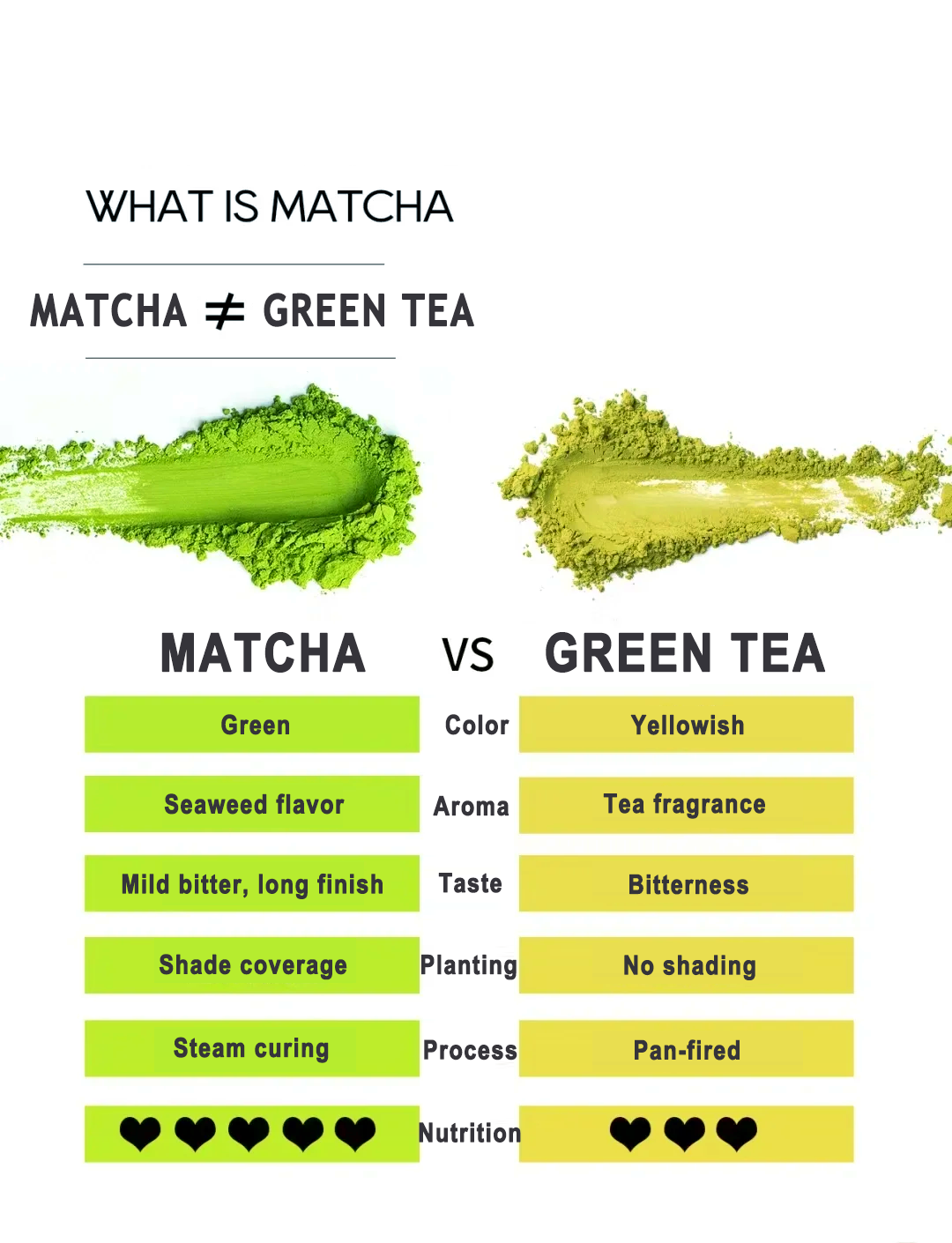
Matcha powder is produced from shade-grown green tea leaves (Tencha) that are finely milled into a vibrant green powder. Shading the tea plants before harvest increases chlorophyll and L-theanine levels. As a result, it delivers a smoother taste and higher nutritional density.
Because matcha powder is consumed as a whole-leaf ingredient, it is therefore widely incorporated into premium beverage, food, and supplement formulations.
What Is Green Tea Powder?
Manufacturers mechanically grind sun-grown green tea leaves into green tea powder. The leaves are not shade-grown and may include mature leaves and stems, resulting in a darker color and more astringent taste.
Green tea powder often serves cost-sensitive formulations or acts as a base material for green tea extracts.
Key Differences in Processing and Quality
The primary differences between matcha powder and green tea powder lie in cultivation methods, leaf selection, and milling techniques, all of which affect final product quality.
Nutritional and Application Differences
Matcha powder generally contains higher levels of L-theanine, chlorophyll, and EGCG antioxidants, making it suitable for premium and functional products.
Green tea powder provides basic antioxidant benefits and is suitable for traditional or cost-controlled formulations.

ALICE BIO Perspective
From an ingredient supplier’s perspective, matcha powder and green tea powder serve different strategic roles in product development and brand positioning.
ALICE BIO supplies both ingredients to global markets, supporting food, beverage, and supplement manufacturers with stable quality and export-ready solutions.
Conclusion
Although matcha powder and green tea powder look similar, they target distinct applications and market strategies. Understanding these differences is essential for successful product development.


Contact us
·Contact us via WhatsApp: +86 15829473592 or visit our [Product Matcha] or [Product Green Tea] for details.
·Always verify local regulations before commercial use.
SHAANXI ALICE BIO-TECH CO., LTD.
E-mail: info@herbingredient.com
Whats App: +86 15829473592
Web site: www.herbingredient.com